Power bills rarely jump because of one bad month. More often, they creep up through longer operating hours, ageing equipment, poor controls and tariffs that no longer suit the way your business runs. If you are looking at how to reduce business energy costs, the biggest gains usually come from fixing the system as a whole rather than chasing one quick win.
For most Australian businesses, energy costs are shaped by three things: how much electricity you use, when you use it, and how efficiently your site turns that power into heating, cooling, lighting, refrigeration, hot water or production output. That matters because two businesses with similar bills can have very different opportunities. A warehouse with high daytime demand will not have the same path as a café with refrigeration running around the clock, or an office with old air conditioning and poor zoning.
How to reduce business energy costs without disrupting operations
The best approach is practical. Start with changes that lower waste straight away, then plan upgrades that improve long-term performance. Done properly, this should reduce costs without making staff uncomfortable or interrupting customers.
A good first step is to understand your load profile. That means knowing what equipment uses the most power, what runs during peak tariff periods, and what keeps drawing electricity after hours. Many businesses are surprised by how much energy is being consumed when the site is meant to be quiet. Air conditioning left on overnight, hot water systems heating when no one is there, signage running longer than needed and old refrigeration cycling inefficiently can all add up.
Meter data and bill analysis help, but the most useful insights usually come from a site-based energy assessment. Looking at your actual equipment, operating schedule and building layout often reveals obvious savings that are easy to miss on paper.
Start with the loads that run the longest
If a system runs every day, even small efficiency gains can make a noticeable difference over a year. In many commercial premises, air conditioning is one of the biggest cost centres. Older units tend to work harder, control temperature less accurately and waste power in areas that do not need conditioning.
Upgrading to a modern, high-efficiency heating and cooling system can cut energy use while improving comfort. The savings are even stronger when the system is correctly sized and zoned. Oversized units can cycle poorly, while undersized systems struggle and stay on longer. Good controls matter just as much as the equipment itself.
Lighting is another common opportunity. If your business still relies on older fluorescent, halogen or metal halide fittings, switching to LED lighting can reduce consumption quickly. The savings improve further when lighting is paired with sensors, timers or daylight controls, especially in storerooms, amenities, car parks and low-traffic areas.
Then there is hot water. In hospitality, accommodation, health, fitness and some industrial settings, hot water can be a major expense. Heat pump hot water systems are often worth considering because they use electricity more efficiently than conventional electric resistance systems. The right setup depends on usage patterns, available space and demand peaks, but the operating cost difference can be significant.
Reduce waste before you add generation
Solar is one of the most effective ways to cut daytime electricity costs, but it works best when your site is already reasonably efficient. There is little value in generating cheaper electricity just to waste it through poor controls, leaky ductwork or outdated plant.
That is why smart businesses usually tackle low-hanging operational waste first. Timer schedules should match real business hours, not old assumptions. Temperature setpoints should be sensible, not extreme. Doors to conditioned spaces should seal properly. Fridges and freezers should be maintained so they are not overworking. Filters should be cleaned, and equipment should be serviced before performance slips.
These are not glamorous changes, but they can produce reliable savings with relatively low upfront cost. They also improve the return on larger investments later.
Review your tariff, not just your usage
A lot of businesses focus only on kilowatt-hours and ignore the pricing structure underneath. That can be expensive. Depending on your retailer and network tariff, charges may include peak demand, time-of-use pricing or seasonal rates. If your operations have changed over time, your tariff may no longer suit your business.
For example, a business that shifted more work into the evening, added electric equipment or extended trading hours may now be paying more during expensive periods without realising it. In some cases, changing operating schedules by even an hour or two can lower demand charges or reduce exposure to peak rates.
This is where energy strategy becomes more valuable than simple cost-cutting. The goal is not always to use less electricity overall. Sometimes it is to use it at cheaper times, or to avoid sharp spikes that trigger higher charges.
How to reduce business energy costs with solar and battery storage
Once site efficiency has been addressed, on-site generation can deliver strong long-term savings. For many Australian businesses, commercial solar makes sense because the highest energy use often lines up with daylight hours. Offices, retail sites, workshops, schools and many industrial facilities consume plenty of electricity when solar production is strongest.
The financial result depends on system size, your daytime load, roof space, export limits and tariff settings. A properly designed system should match your usage profile rather than simply fill every available square metre of roof. Bigger is not always better if much of the energy is pushed back to the grid at a low feed-in rate.
Battery storage adds another layer of control. It can store excess solar generation for later use, reduce reliance on grid electricity during peak periods and in some cases help shave demand spikes. That can be valuable for businesses with high late-afternoon consumption, critical equipment or a need for greater energy resilience.
There is a trade-off, though. Batteries generally involve a higher upfront investment than solar alone, so the business case depends on your load pattern, tariff structure and backup needs. In some sites, solar on its own offers the fastest payback. In others, a battery becomes more attractive because it improves self-consumption or supports continuity during outages.
Focus on one integrated plan, not isolated upgrades
One of the most common reasons businesses miss savings is that upgrades are done in pieces. Lighting gets replaced one year, HVAC gets patched the next, solar is added later, and no one checks whether the systems actually work together.
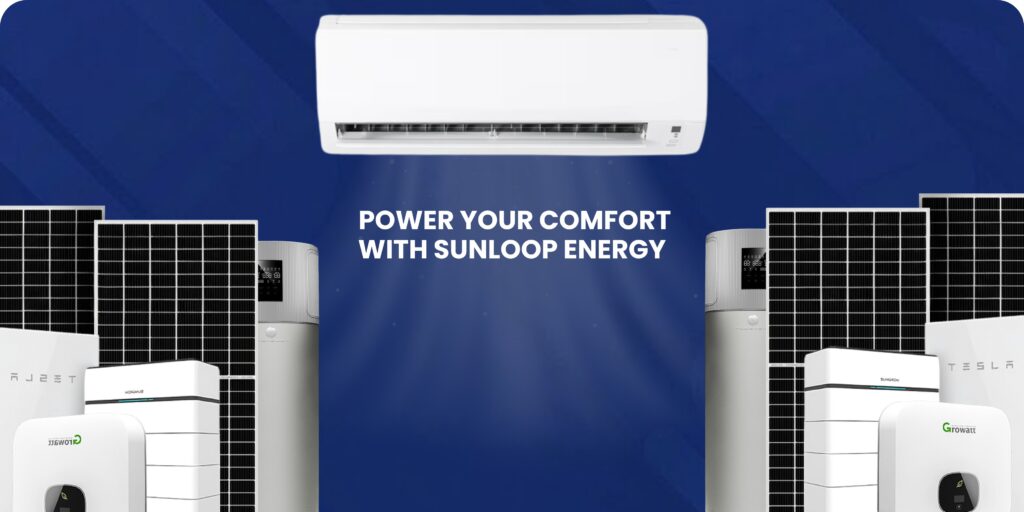
A better outcome usually comes from treating your site as an energy ecosystem. If you are planning new air conditioning, hot water upgrades, EV charging, battery storage or solar, those decisions should be coordinated. The right design can reduce overspending, improve performance and simplify compliance, installation and maintenance.
This is especially important if your business operates from a property you intend to hold long term. Energy upgrades are not only about today’s bill. They can improve comfort for staff and customers, reduce maintenance headaches, support ESG goals and make the property more future-ready as electrification expands.
Maintenance protects the savings you already have
Reducing energy costs is not just about buying better equipment. It is also about making sure it keeps performing. Dirty filters, failing sensors, refrigerant issues, poor commissioning and neglected controls can steadily erode savings.
Regular servicing helps systems run efficiently and reduces the risk of breakdowns during high-demand periods. That matters in Australia, where a failing cooling system in summer can create both a comfort problem and a cost blowout. Preventative maintenance is usually cheaper than emergency repairs, and it helps protect the return on any upgrade investment.
Where businesses should start
If you want a sensible path forward, begin with the areas that offer the clearest financial impact. Review your bills and tariff structure. Identify major loads such as air conditioning, lighting, refrigeration, hot water and machinery. Check what is running outside business hours. Then assess whether existing equipment is still fit for purpose or quietly driving up costs every month.
From there, build a staged plan. That might mean quick operational fixes now, followed by efficient equipment upgrades, then solar or battery storage when the numbers stack up. For many businesses, the best result comes from working with one provider that can assess the site, design the right combination of technologies and manage the job from start to finish. That avoids the usual disconnect between advice, installation and after-sales support.
SunLoop Energy works with businesses that want exactly that – a clear, practical path to lower energy costs with integrated upgrades that are designed to perform in the real world.
The real opportunity is not just shaving a few dollars off the next bill. It is building a site that uses less energy, wastes less money and stays easier to run year after year.